Bloombay
C-3 Soy Container Wax
C-3 Soy Container Wax
Couldn't load pickup availability
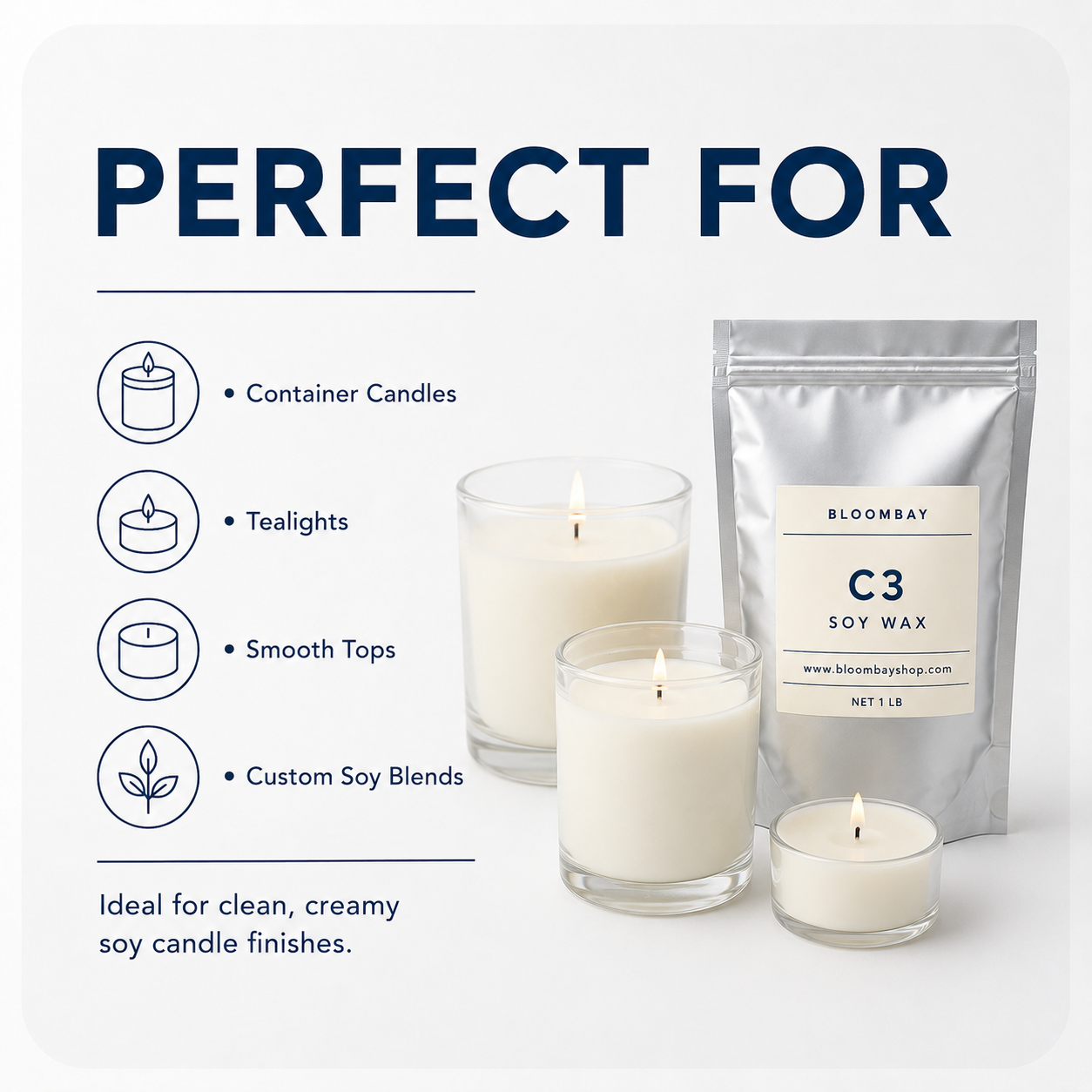
Cargill NatureWax C-3 Soy Container Wax is a soy container wax made for jars, tins, and small-batch candle making. It has a firmer feel than softer soy waxes and is often chosen by makers who want good glass adhesion, a creamy opaque finish, and dependable container candle performance.
Best For
- Glass jar candles
- Candle tins and tealights
- Soy container candles
- Makers who want a firmer container soy wax
Wax Properties
Description
Cargill NatureWax C-3 is a soy container wax designed for candles poured into glass jars, tins, and other heat-safe containers. It creates an opaque, creamy finish and is a strong option for makers who want a firmer soy wax with good container performance.
C-3 can produce smooth results, but it is more sensitive to temperature, cooling conditions, and fragrance oil than some beginner waxes. Final results depend on your fragrance oil, wick, vessel, dye, room temperature, and cure time.
Key Features
- Made for soy container candles
- Good choice for jars, tins, and tealights
- Opaque creamy off-white finish
- Firmer feel than softer soy container waxes
- Good glass adhesion when properly tested
- Reliable option for small-batch candle makers
How to Use
- Melt wax until fully liquid.
- Add fragrance oil at your tested fragrance-add temperature.
- Stir slowly and evenly for about 1–2 minutes.
- Pour into a prepared jar, tin, or tealight cup.
- Allow the candle to cool slowly and cure before burn testing.
Fragrance & Wick Testing
A common fragrance load range for C-3 is 6–10%. More fragrance oil does not always mean stronger scent. Too much oil can cause sweating, poor burn quality, weak hot throw, rough tops, or wick issues.
HTP and CD wick series are common starting points for C-3 soy container candles, but wick size must be tested with your exact jar, fragrance oil, dye, and fragrance load.
Troubleshooting
C-3 can be sensitive to temperature and cooling conditions. Rough tops, sinkholes, frosting, wet spots, cracking, or pull-away can happen during testing.
- Rough tops: Adjust pour temperature or smooth the surface with a heat gun if needed.
- Sinkholes: Pour slowly and test a top-off pour if needed.
- Cracking: Avoid cold jars, cold rooms, and rapid cooling.
- Wet spots: Warm jars slightly and cool candles slowly.
- Weak scent throw: Test fragrance load, cure time, and wick size.
- Wick issues: Re-test wick size if the flame is too weak, too large, or unstable.
Shipping & Storage
Store wax in a cool, dry place away from direct sunlight, heat, moisture, and strong odors.
During hot-weather shipping, wax flakes may soften or stick together. This usually does not damage the wax. Let the wax return to room temperature before use.
Q & A
Is Cargill C-3 beginner-friendly?
It can be used by beginners, but it is less forgiving than some softer soy container waxes. Temperature control, cooling conditions, fragrance testing, and wick testing matter.
What is C-3 best used for?
It is best used for container candles, including glass jars, candle tins, and tealights.
Is C-3 better than GB 464?
Not automatically. C-3 is firmer and can give a sturdy soy container finish. GB 464 is softer and often easier for beginners because of its lower melt point and strong jar adhesion. Choose based on your jar, fragrance oil, and burn test results.
Is C-3 a true single-pour wax?
It can work well as a single-pour wax in some formulas, but rough tops, sinkholes, or surface touch-ups may still happen. Do not promise yourself single-pour results until you test your exact formula.
Can I use this wax for molds or pillar candles?
No. C-3 is a container wax. For molds, pillars, or freestanding candles, use a pillar wax.
Can I use this wax for wax melts?
It is mainly designed for container candles. For wax melts, a tart or melt wax is usually a better choice.
Why did my C-3 candle crack or pull away from the jar?
This is usually caused by cold jars, cold room temperature, fast cooling, or pouring at the wrong temperature for your environment. Warm jars slightly and test a slower cooling process.
How long should candles cure?
For best fragrance performance, many makers allow soy candles to cure for 1–2 weeks before final burn testing.
Share